
How One Brooklyn Teacher Is Redefining Career Readiness with KnoPro

Spend enough time talking with teachers preparing high school students for a rapidly-shifting future, and you’ll hear a familiar tension. Schools want graduates to leave with real-world skills and a clear path forward, yet traditional curricula can feel rooted in another era. While foundational knowledge and critical thinking still matter, they don’t always translate into career readiness. In that gap – between intention and preparation – innovation thrives. And that’s where you’ll find Michael Maslankowski.
Maslankowski is the Career Readiness and Transition Coordinator at the High School of Telecommunication Arts and Technology in Bay Ridge, Brooklyn, a Title One school supporting a multifaceted learner cohort. The role already asks him to wear several hats, yet when he encountered KnoPro during the New Visions for Public Schools’ WBL PD Series, something clicked. The platform’s premise was simple yet out of the box. KnoPro brings industry-aligned problem solving directly into the classroom, removing the logistical hurdles that may prevent many students from participating.
It was, in Maslankowski’s’s words, exactly what had been missing.
Building a Classroom That Feels More Like a Startup
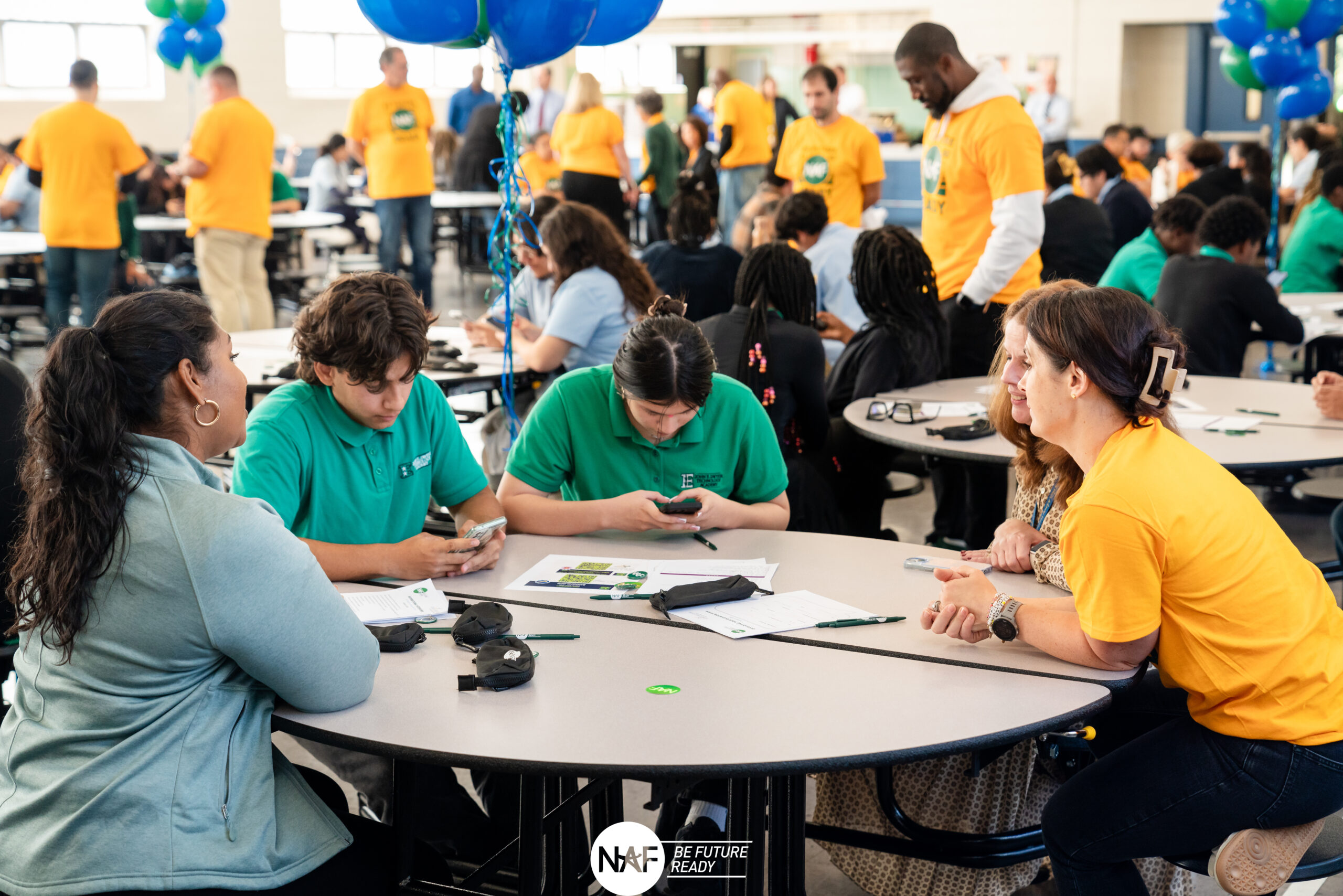
From that initial spark, he built a new course called Business Innovations, a class designed not around chapters or units but around the idea that students learn best by doing something that matters. Students in his class participate in each KnoPro Challenge published during the quarter of instruction, completing 3 real-world industry case studies through the course of a semester. He redesigned the classroom environment so that it functions much more like a small startup than a traditional high school course.
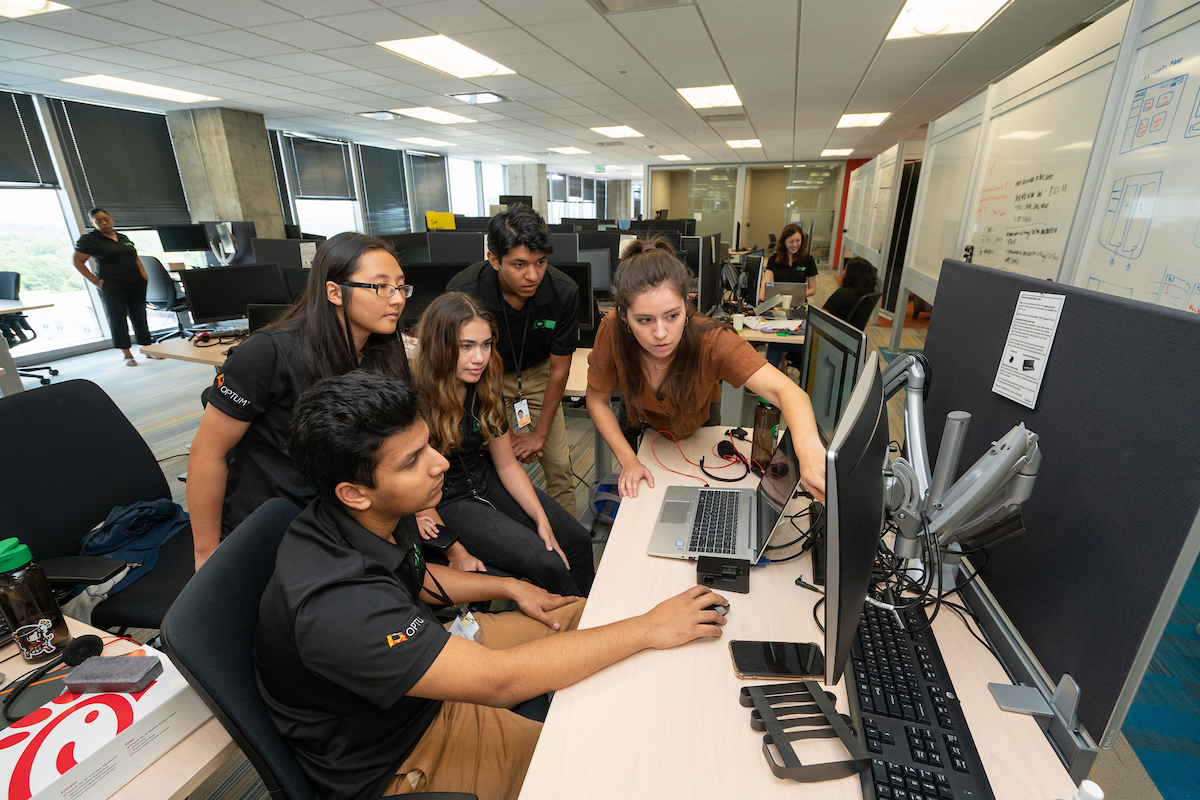
In their teams, students operate within functional roles they applied for, interviewed for, and now inhabit. Project managers within each team lead standups. Marketing teams debate messaging choices. Finance leads review budgets. Product designers ideate prototypes that will eventually be judged by real professionals. Everything about the structure signals that students are doing real, meaningful work.
If this sounds like what happens in early-stage companies, that is Maslankowski’s intention. His students are active participants navigating ambiguity, aligning inputs, and shipping work that will be reviewed externally by experts. It is a profoundly different experience from traditional instruction, and for many students, that difference is catalytic.
When Students Feel Ownership, Everything Changes
One of Maslankowski’s clearest early signals came from a student he had previously taught in U.S. History, a student who often hovered near the pass threshold and struggled to stay engaged. In the KnoPro-based class, though, everything changed. The student stepped forward, took ownership, led his group, and began producing work that revealed a confidence few had seen before. When Maslankowski asked what felt different, the student explained that this work mattered. He had choices. He could bring his own perspective into the solution.
Stories like that are not outliers in Maslankowski’s course. Students learn and practice collaboration in an authentic context. They develop communication skills because their pitches are sincere and not hypothetical. They practice conflict resolution because real stakes and real deadlines create genuine tension. They discover new potential career paths because the projects expose them to disciplines, they never knew existed. Plus, they know that their work will be reviewed by industry professionals and they can win real prize money.
Turning Real Work into Real-World Credentials
Just as importantly, within the startup classroom model, students create resumes that reflect actual capability. Maslankowski teaches them how to translate their project roles into language that resonates in college or job applications. He reminds them that they are not simply students completing assignments. They are acting as consultants, analysts, designers, and strategists navigating challenges – posed by top companies, like long-standing NAF partners, Lenovo and KPMG.
For many of his students, this resume-building step is transformative. They often begin the year unsure of what to put on a resume. By year’s end, they have concrete examples of leadership, problem solving, project management, and creative output, all tied to real employer scenarios.
What It Takes for Teachers to Make This Work
For teachers curious about replicating this model, Maslankowski is quick to clarify that you do not need a business degree or a startup background. What you need is a willingness to recalibrate what direction looks like.
KnoPro’s structure makes the model free and accessible even for educators who are new to this type of facilitation. The platform becomes a ready-to-use entry point for delivering high quality work-based learning without needing to secure dozens of internship placements.
Why This Matters for Students Right Now
When you listen to Maslankowski describe what happens in his classroom, it becomes clear that the most meaningful outcome is not the prize money, the national rankings, or even the polished pitch decks. It’s the moment students start seeing themselves as contributors to the world around them. They’re already building important skills and gaining confidence in a classroom that trusts they can handle responsibility.
For any teacher wondering whether this work is worth the effort, Maslankowski’s answer is simple. Students deserve to see who they can become, and KnoPro helps make that visible.
Ready to Learn More?
Check out KnoPro’s latest Challenge, Game Changers: Tech that Transforms Sports, sponsored by Lenovo, to see how you can quickly and easily add a KnoPro Challenge to your curriculum.