


The students plan to draft and propose legislation to ban English Ivy in the District later this year.
Author: John Doran
WASHINGTON — Some D.C. high school students are out of the classroom this week for spring break, but haven’t stopped working or learning.
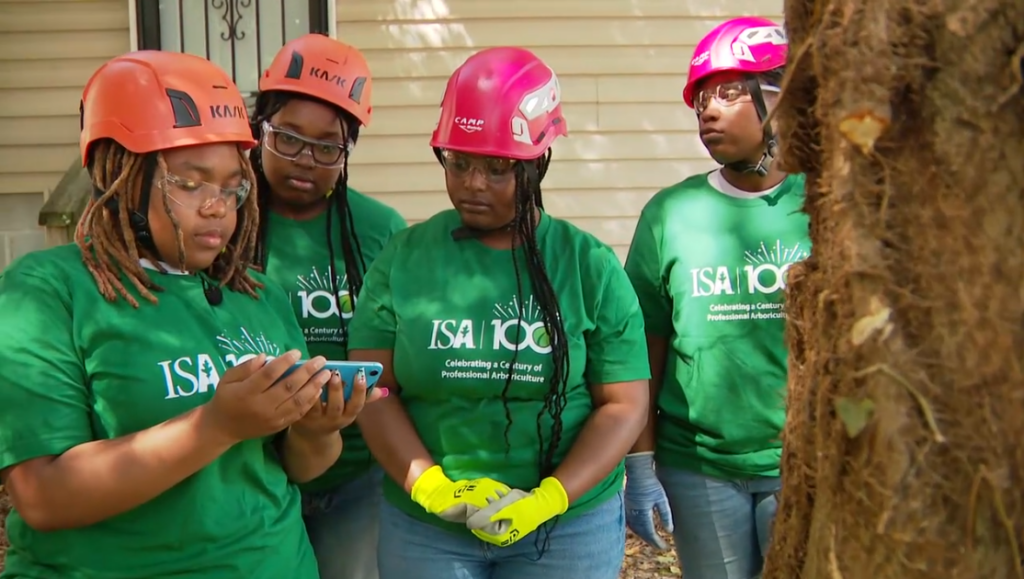
A group of junior arborists found work treating sick and hazardous trees through paid high school internship programs through DC’s Office of the State Superintendent of Education.
“It’s definitely something I want to get across to them about the importance of being connected to the landscape and your environment,” said Charles Boston, a certified arborist and host employer for the young interns.
Boston wants to introduce the next generation to careers outdoors and a career that gave him direction.
“With a lot of our young people, they lack purpose. That’s a huge problem, and it’s not necessarily their fault,” said Boston. “To me, our young people are our social and economic future, and I really feel obligated to share what I know that’s helped me.”
Using skills in the classroom out here and expanding horizons these students didn’t know existed.
“It gives you opportunities to do different things with your life,” said Avery Malone, a Sophomore at Phelps ACE High School. “You might want to do one thing, but that one thing might not work, and this, I’m learning about trees as a junior arborist, so maybe, eventually, I will want to be an arborist if my plan one doesn’t work.”
Part of the project on Friday was removing English ivy from trees. They say this ivy is killing trees across the region, and pretty soon, Boston tells me, he and these kids will be presenting legislation to ban the sale of English ivy in the district.
“I really like the fact that students will be leading that,” said Boston. “They’ll be future taxpayers, and they’ll be the ones that are inheriting our lands, but to connect them at that level from a political standpoint, I think it’s really, really important.”
Students are given these paid opportunities through DC Public Schools’ Advanced Internship Program and NAF Academies, but Boston says they need more funding.
“Only a third of students are actually getting placed. In a few months, you’ll probably have 1,500 juniors going into their senior year. They know about the apprenticeship, they’ve met behavioral requirements, and attendance requirements. They understand the importance of an internship, but two-thirds of them won’t get placed,” said Boston. “We have to find a way to fund that.”