


Beyond Hotels and Resorts: Spotlighting High-Growth Hospitality & Tourism Careers for Tomorrow’s Industry Leaders
When most people think about careers in hospitality and tourism, hotel front desks and megaphone-toting tour guides are usually the first jobs that come to mind. But the hospitality and tourism industry is vaster and more varied than most students realize — and it’s growing fast. The U.S. Bureau of Labor Statistics (BLS) predicts that over 600,000 jobs will be added to the field by 2034 based on 2025 projections.
For NAF students, this signals robust opportunity across a wide hospitality and tourism career landscape — one that includes many careers students may not have considered. From chefs shaping a restaurant’s identity to marketing managers building the brand of a resort, city, or region, to entertainment and recreation managers running operations on a cruise ship. These aren’t backup plans — they’re among the fastest-growing, most dynamic, and most globally connected careers in America right now.
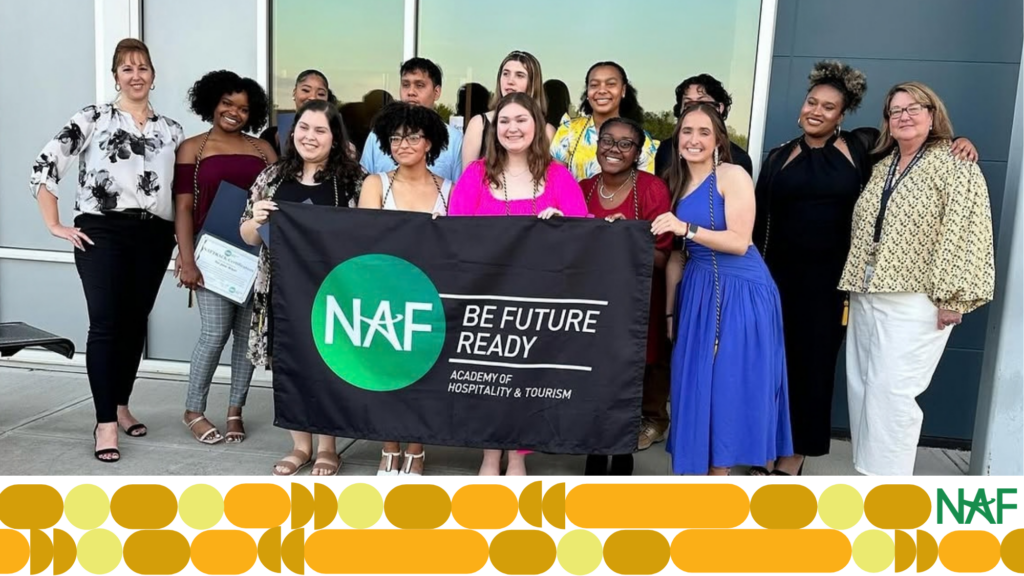
NAF Academies of Hospitality & Tourism support students in igniting their aspirations, growing professional skills, and connecting with experts in the field through career-focused curricula that spans event planning, marketing, sustainability, and the global geography of travel. Hospitality and Tourism pathway students also gain transferable skills through behind-the-scenes tours, internships, mentorship, and forging connections with industry leaders.
The NAF Hospitality and Tourism pathway doesn’t just prepare the next generation to work in the industry. It prepares them to lead it. Work-based learning opportunities, industry connections, and real-world projects students experience through NAF offer a head start that most students simply don’t have. Based on the data and the overviews below, students might uncover a new area of the field worth exploring, such as:
- Meeting, Convention, and Event Planners — This growing profession sits behind the scenes of the conferences, conventions, trade shows, galas, and product launches that keep the business side of tourism running. Planners coordinate everything from venue selection to vendor contracts to on-site logistics, often specializing in areas like corporate meetings, association conferences, or large-scale exhibitions. In terms of growth, the Bureau of Labor Statistics (BLS) projects a 5% increase between 2024 and 2034, with about 15,500 openings projected each year. Most planners hold a bachelor’s degree, often in hospitality management, business, or communications.
- Chefs and Head Cooks — Culinary arts is one of the most visible — and most dynamic — corners of hospitality and tourism. Chefs and head cooks oversee daily food preparation and set the creative direction of a kitchen, whether in a neighborhood restaurant, a resort, or a cruise ship dining room. The BLS projects the field to grow 7% by 2034 — much faster than average. Entry typically requires a high school diploma plus significant hands-on experience, though many chefs also attend culinary school or complete an apprenticeship after high school.
- Entertainment and Recreation Managers — This is the career path for students drawn to the operations side of adventure and experiential tourism — think cruise directors, resort activities directors, and recreation managers at all-inclusive properties. The BLS specifically notes that these managers work in settings that include cruise ships as well as parks and recreational facilities, planning and directing the activities and operations that define a guest’s experience. The field is projected to grow 8% by 2034 — much faster than average. Some roles are accessible with a high school diploma and work experience, though a bachelor’s degree strengthens prospects for leadership positions and upward career growth.
- Marketing Managers — Every destination, hotel brand, airline, and cruise line depends on marketing managers to shape how travelers discover and choose them. In tourism specifically, this can mean destination marketing organizations, hospitality brand campaigns, or digital strategy for a travel company. The BLS projects 6% growth through 2034 — faster than average — and statistically among the highest-paying careers in the entire hospitality and tourism ecosystem. Most marketing managers hold a bachelor’s degree, often in marketing, communications, or business, and increasingly benefit from digital marketing expertise including but not limited to graduate coursework.
- Tour and Travel Guides — This is where adventure tourism lives: leading hikers through national parks, guiding history buffs through historic districts, or narrating a small-group tour through a new city. Guides plan routes, research talking points, and are often the single biggest factor in whether a traveler’s overall experience feels memorable. The BLS projects 8% growth through 2034 — much faster than average. A high school diploma is typically sufficient to start, though specialized guiding (wilderness, historical, multilingual) can command higher pay and demand additional certification.
No matter which aspect of the hospitality and tourism career path resonates with today’s students, the real-world experiences and career-connected curricula of NAF Academies of Hospitality & Tourism help students turn their interests into meaningful career pathways. From relevant coursework and career exploration to real-world workplace experiences, graduates develop the skills, knowledge, and confidence to pursue a wide range of opportunities across this growing and exciting industry.