
The Innovation Triad: How Structure, Process, and Permission Create an Engaged Student Classroom

There is a moment most educators recognize immediately.
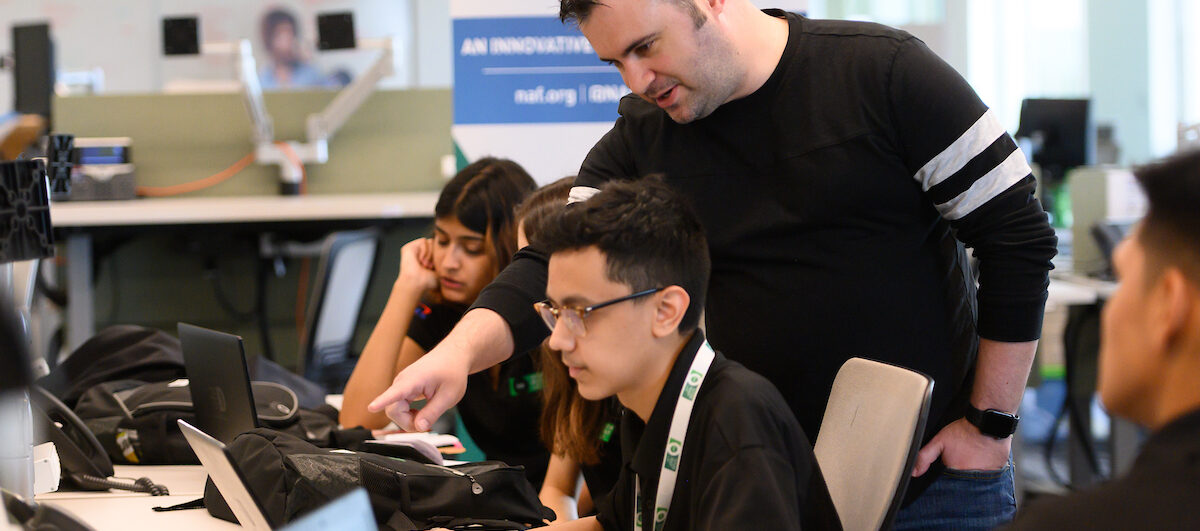
The student who typically watches the clock, engages minimally, who seems to be merely enduring the school day— suddenly leans forward. They begin sketching ideas in a notebook margin. They ask clarifying questions. They argue for a design choice with unexpected conviction, defending their reasoning to skeptical peers.
This transformation tends to occur when the work becomes real. Not simulated real, not “imagine you’re a scientist” real, but genuinely real: an actual problem affecting actual people, with outcomes that matter beyond the gradebook.
Teachers have earned their skepticism toward “innovation initiatives.” Each year brings another framework, another acronym, another professional development session promising that this approach will finally transform student engagement. That wariness reflects hard experience. However, there is a version of innovation education that actually reduces classroom friction rather than adding to teacher workload. The difference lies in shifting who does the pulling. When students encounter problems they genuinely want to solve, they begin driving their own learning forward. The teacher’s role shifts from pushing content toward reluctant recipients to guiding motivated learners who are actively seeking the knowledge they need.
Students keep asking a question that deserves a better answer
Across grade levels and subject areas, students continue to ask a fundamentally honest question: “When would I ever use this?” Traditional instruction often struggles to provide a satisfying response. Abstract concepts presented in isolation from application can feel disconnected from students’ actual lives.
Work-based learning has long offered the most compelling answer to this question. When students see professionals applying mathematical reasoning, written communication, or scientific thinking to solve genuine problems, the relevance of classroom content becomes immediately apparent. The challenge is that traditional work-based learning models present significant scaling constraints. Meaningful internships depend on local business capacity, available transportation, complex liability arrangements, and scheduling coordination that many schools cannot manage. Geographic isolation compounds these challenges even further.
The complicated result is that access to career-connected learning often depends on factors beyond students’ control: zip code, family connections, school resources, and local economic conditions. Research suggests that only a small percentage of high school students secure quality internship experiences each year. For the substantial majority, the bridge between classroom learning and professional application remains entirely theoretical—a promise that school will eventually prove useful, without concrete evidence to support that claim.
The productive question is no longer whether, but how
The contemporary debate has moved past whether schools should cultivate innovation and problem-solving capabilities. Employers across industries consistently identify the same cluster of competencies as essential: critical thinking, collaborative skills, adaptive problem-solving, and the capacity to navigate ambiguity. These are not durable skills peripheral to academic content; they are foundational capabilities that determine whether content knowledge translates into professional effectiveness.
The more productive question facing educators and administrators is this: What classroom conditions reliably produce these outcomes? And critically, can those conditions be created without requiring specialized equipment, external grant funding, or unsustainable time commitments from educators already managing substantial demands?
Innovation requires three elements working together
Sustainable classroom innovation depends on three complementary elements functioning in concert, much like a three-legged stool requires all three legs to remain stable. Each element serves a distinct purpose, and removing any single component compromises the entire structure.
Project-Based Learning provides what might be called the container—the structural framework that makes intellectual risk-taking feel safe rather than reckless. Design Thinking provides the navigation system—a cognitive process that prevents students from leaping to solutions before they understand the problem they are actually trying to solve. Maker Mentality provides the engine—a disposition toward building, testing, and iterating that replaces passive consumption with active creation.
When educators understand how these three elements reinforce one another, innovation shifts from being an occasional happy accident to becoming a predictable, repeatable classroom outcome.
Structure does not limit creativity—it channels creative energy toward meaningful outcomes
Project-Based Learning is frequently misunderstood as simply assigning large projects and hoping for the best. This misunderstanding leads to frustrating experiences: students flounder without clear direction, teachers struggle to assess sprawling work, and everyone concludes that “projects don’t work in my context.”
More precisely, PBL represents a framework built on three essential scaffolds: clear milestones that break complex work into manageable phases, authentic audiences beyond the teacher who will evaluate the final product, and meaningful constraints that focus creative energy rather than dissipate it in all directions.
Think of PBL structure the way an architect thinks about a building’s frame. The frame does not limit what happens inside the building—it makes the interior spaces possible. Without structural support, there is no building at all, just materials scattered across a lot. Similarly, PBL structure does not constrain student creativity; it creates the conditions under which creativity can actually produce something coherent.
The Buck Institute’s Gold Standard PBL framework identifies several essential design elements worth understanding. Authenticity means the project connects to real-world contexts, tasks, and quality standards rather than existing purely as a school exercise. Sustained inquiry means students engage over extended time, asking questions, gathering resources, and applying information rather than completing work in a single session. Student voice and choice means learners make genuine decisions about their approach rather than following a predetermined script. Critique and revision means students give, receive, and act on feedback to improve their work. Public product means student work is shared with audiences beyond the classroom, creating accountability that transcends grades.
When students can clearly see their next milestone and understand why it matters, two important shifts occur. Behavioral challenges tend to decrease because confusion and aimlessness—frequent sources of disengagement—are replaced by purposeful activity. Simultaneously, productive momentum increases because each completed phase generates energy for the next. A well-designed rubric with transparent checkpoints consistently outperforms vague encouragement to “be innovative.”
Process prevents the costly mistake of solving the wrong problem brilliantly
The challenge most students face is not generating ideas. Given an open-ended prompt, students can typically produce numerous possibilities. The more significant challenge is arriving at ideas worth pursuing—solutions that actually address real needs rather than assumptions about what people want.
Design Thinking addresses this challenge by requiring deliberate time in what practitioners call “the problem space” before permitting movement toward solutions. This requirement runs counter to natural inclination. When we encounter a problem, most of us immediately begin imagining solutions. Design Thinking asks us to resist that impulse and instead invest effort in understanding the problem more deeply first.
The traditional Design Thinking model includes five stages: Empathize, Define, Ideate, Prototype, and Test. For classroom application, these stages translate into concrete artifacts that scaffold student thinking and make their reasoning visible.
A user persona answers the foundational question of who the solution actually serves. Rather than designing for an abstract “user,” students create a specific fictional person with a name, background, needs, and pain points.. This persona becomes a touchstone throughout the project: “Would this feature actually help Maria? Does this solution address what Carlos said affected him most?”
A “How might we…?” statement clarifies what problem actually requires solving. This seemingly simple question format does important cognitive work. It assumes the problem is solvable (we’re asking how, not whether), it implies collaboration (we, not I), and it opens possibility rather than closing it (might, not must). A well-crafted “How might we…?” statement focuses subsequent ideation without prematurely constraining it.
A prototype-first expectation shifts the standard from polished explanation to tangible demonstration. Instead of describing what their solution would do, students build something—however rough—that shows what they mean. This shift from telling to showing consistently surfaces assumptions and gaps that verbal description alone would miss.
The practical benefit for educators is significant. Fewer projects miss their intended purpose because students have done the upstream work of understanding who they are designing for and what problem they are solving. Student reasoning becomes more coherent and defensible because the process has required them to articulate their thinking at each stage. Assessment criteria become clearer because they are grounded in process quality, not just product polish.
Making is a mindset, not a machine—and it belongs in every classroom
The maker mentality is frequently associated with robotics labs, laser cutters, and 3D printers. This association, while understandable given the maker movement’s origins, unnecessarily limits who gets to participate in making and where making can happen.
At its core, maker thinking represents a disposition rather than a toolset: the belief that one can shape solutions rather than merely consume them. This disposition is about agency—the felt sense that I can affect my environment, that my ideas can take form in the world, that creating is something I do rather than something other people do.
This disposition manifests whenever students create tangible representations of their thinking, regardless of the medium. A wireframe sketch showing how an app might work is making. A storyboard mapping how a video might unfold is making. A cardboard mockup demonstrating how a physical product might function is making. A business model canvas outlining how a venture might operate is making. A campaign draft with authentic messaging choices is making.
Broadening the definition of “making” dramatically expands who experiences competence in innovation contexts. Students with artistic inclinations find that their visual skills translate directly into prototyping capability. Students with strong writing abilities discover that crafting persuasive messaging is genuine creation. Students with planning aptitudes recognize that structuring a business model requires creative thought. Students with observational strengths learn that documenting user needs is foundational making work.
The developmental muscle that builds lasting confidence is not any particular tool or medium—it is the cycle of iteration and reflection. Building something imperfect, testing it against reality, learning from the gap between intention and outcome, and revising with new understanding. This cycle, repeated across projects and contexts, gradually instills the maker identity: I am someone who creates things and improves them through experience.
When structure, process, and disposition align, a reinforcing cycle emerges
When these three elements work together effectively, something greater than their sum emerges. Students move through a repeatable cycle that builds both capability and identity.
Empathy-building activities lead to genuine understanding of user needs. That understanding generates a focused problem statement. The problem statement opens space for solution ideation. Promising ideas become rough prototypes. Prototypes receive authentic feedback from people whose opinions matter. Feedback drives meaningful revision. Refined solutions culminate in public presentations, where students articulate and defend their work.
This cycle—empathy, definition, ideation, prototyping, feedback, iteration, presentation—is what innovation actually looks like in practice. Not a flash of genius, but a process that reliably produces progressively better solutions.
Students engaged in this cycle do not simply learn content. They begin forming professional identities. They start to see themselves as people capable of understanding complex problems and developing thoughtful responses. This identity formation may be the triad’s most significant long-term outcome, extending far beyond any individual project or course.
Digital platforms can make this approach accessible regardless of school resources
Implementing the innovation triad has traditionally required significant teacher investment in designing authentic challenges, establishing industry connections, and building assessment frameworks from scratch. This implementation burden has meant that triad-based learning often remained confined to well-resourced schools or exceptionally dedicated individual educators.
Digital platforms have emerged that operationalize this approach at scale, reducing the design burden while maintaining authenticity. For example, NAF’s KnoPro, offers industry-sponsored Challenges from top companies that walk students through each phase of the innovation process—while building their skillsets, boosting their resumes, and offering a chance to win cash prizes for their futures.
What distinguishes platforms like KnoPro is the combination of structure, authenticity, and accessibility. The structure comes from the five-phase challenge framework—Explore, Focus, Imagine, Create, Pitch—which maps directly onto the Design Thinking process while embedding PBL principles throughout. The authenticity comes from genuine industry sponsorship; students are solving problems that real companies actually care about, with professional mentors providing feedback. The accessibility comes from the platform being entirely free, offering opportunities to greater numbers of students to engage in high-quality work-based learning experiences.
The platform additionally incorporates substantial prize incentives, with monthly challenges awarding thousands of dollars to winning teams. For today’s high school students, these financial rewards validate that their intellectual work has genuine economic value—a message that traditional education rarely communicates so directly.
Practical entry points for educators ready to begin
Educators interested in exploring the innovation triad might consider three accessible modifications to existing practice. These entry points do not require wholesale curriculum revision; they introduce triad elements into work teachers are already doing.
First, consider replacing a traditional assignment with a challenge prompt that includes a real user and genuine constraint. Rather than asking students to write a persuasive essay on a topic of their choice, ask them to write messaging that would convince a specific audience to take a specific action. The content demands remain similar, but the authenticity transforms the task.
Second, consider requiring a single design-thinking artifact before students begin developing solutions. A user persona or a “How might we…?” question adds process rigor to existing project work without dramatically increasing scope. This upstream investment consistently improves downstream solution quality.
Third, consider expecting a prototype accompanied by at least one revision cycle, even when initial attempts are rough. The revision requirement, more than the prototype itself, establishes the iterative mindset central to maker thinking. Students learn that first drafts are starting points, not endpoints.
These modifications need not be drastic to be meaningful. Small, consistent implementation tends to produce more sustainable change than ambitious overhauls that prove difficult to maintain across the demands of a full teaching load.
The inversion that changes everything
The traditional instructional model operates on a particular logic that most educators recognize: Teach concepts thoroughly, assess understanding, then hope students eventually transfer that knowledge to relevant applications somewhere beyond the classroom. This sequence places content first and application second, trusting that relevance will become apparent with time.
The innovation triad inverts this sequence entirely. Present students with authentic problems first. Let them encounter the need for specific knowledge and skills. Then teach concepts as tools required to address challenges students already care about solving.
This inversion does not require teachers to abandon their expertise or their curriculum. The same content gets taught. The same standards get addressed. What changes is the motivational context surrounding that content. Students learning mathematics to solve an engineering challenge they have chosen engage differently than students learning mathematics because it appears in the curriculum sequence. The content is identical; the felt relevance is transformed.
Old approach: teach concepts, hope for transfer. New approach: present problems, teach concepts as needed tools. The difference in student engagement is consistently substantial.
An invitation to explore further
The structure, process, and permission embedded in the innovation triad give language to practices many effective educators already employ intuitively. For those seeking a comprehensive implementation of these principles, platforms like KnoPro offer a structured pathway that removes much of the design burden, while maintaining the authenticity that makes the approach effective.
KnoPro’s industry-sponsored Challenges, professional mentorship, and substantial student incentives represent one accessible way to bring the innovation triad into any classroom, regardless of local resources or existing industry connections.
Explore what is possible at knopro.org. Our next Challenge, sponsored by Lenovo, “Tech for a Thriving Tomorrow” begins Monday, January 19th!