

What happens when industry leading companies ask high schoolers to solve real problems?
Key takeaways
- Only 2% of U.S. high school students complete an internship each year. KnoPro Challenges give the other 98% real industry exposure.
- Corporate partners define the Challenges, judge the work, and discover emerging talent years before traditional recruiting.
- Gen Z and Gen Alpha trust brands that show up for them — not ones that advertise at them.
Only about 2% of high school students in the United States complete an internship each year, according to research from Britebound. The remaining 98% graduate without substantive exposure to industry experience and are left to imagine what careers might suit them, based on limited information and secondhand accounts.
KnoPro Challenges exist to bridge that gap and replace that scarcity with scale. Through KnoPro, students across all 50+ states can participate in high-quality work-based learning and receive real-world exposure to corporate partners.
Sponsoring companies aren’t just sticking a logo on the Challenge – they define each challenge topic, which means students work on problems that professionals are actively trying to solve. The solution to a real business problem may be just one student idea away.
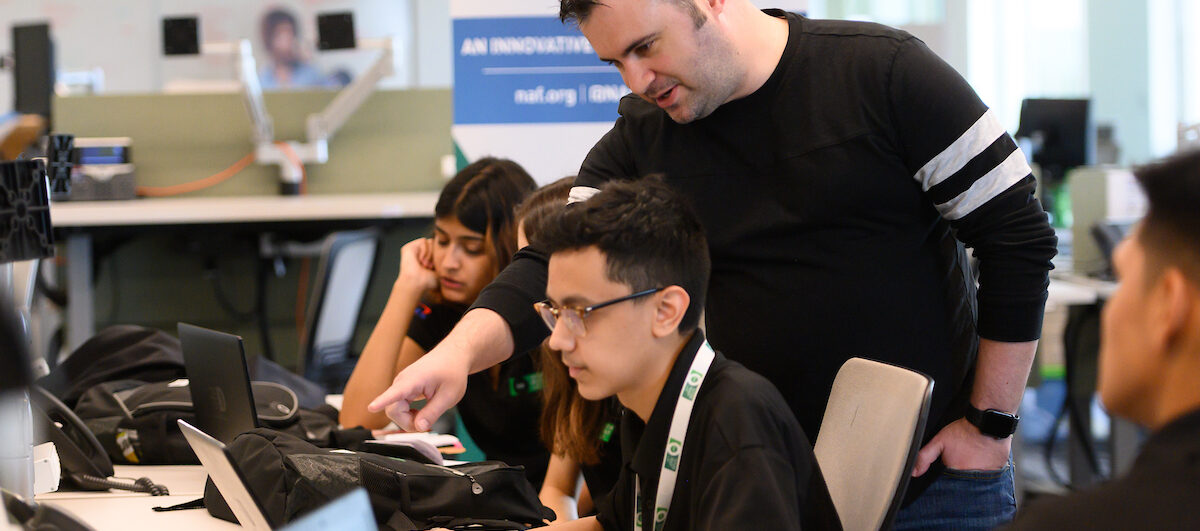
Over four to five weeks, students research, prototype, and pitch solutions. From there, they submit video presentations that company executives review and judge.
This reciprocity is what sets KnoPro apart from a school project with a corporate logo. When KPMG professionals review student pitches, they evaluate ideas that address key questions their own teams are working on.
Companies gain access to student ingenuity years before traditional recruiting would
By the time a company meets a college senior, that student has already chosen a major, built a network, and formed perspectives about which industries interest them and which do not.
KnoPro introduces students to industries and professionals early – while they are still in high school. A student who has never heard of management consulting can take a virtual trip inside KPMG’s work, where they can explore their Lakehouse campus and meet pros in accounting, consulting, tech, and more.
The platform evaluates students on demonstrated capability rather than credentials, connections, or polish. For companies, this means visibility into talent pipelines they would otherwise not have access to. For students, it means their work speaks before their background does.
Gen Z and Gen Alpha trust brands that help them, not brands that advertise to them
Both generations share a defining characteristic: they can detect inauthenticity almost instantly. According to YouGov research, 66% of Gen Z say honesty is “very important” in a brand, and 58% say they watch for consistency between what brands say and what they actually do. Gen Alpha, according to Envisify research, does not inherit brand trust from parents or advertising. They build it through direct experience, evaluate it constantly, and withdraw it quickly when a brand’s actions contradict its messaging; they do not inherit brand trust from parents or advertising. They build it through direct experience, evaluate it constantly, and withdraw it quickly when a brand’s actions contradict its messaging.
Sponsorship works when it creates genuine interaction, not when it generates impressions.
Bobby Soni, the Global Technology Consulting Leader at KPMG, describes what participation looks like in practice: “What makes it work is pairing scale with real depth. Senior KPMG leaders and partners acting as judges take it even further, showing students that their innovation matters at the highest levels of our organization.”
Students don’t just see a logo on a banner; they remember the companies that believed in them early and supported their journey as they build their futures.
Winning submissions demonstrate problem-framing, feasibility analysis, and communication
Most corporate volunteer programs ask employees to donate their time, whereas KnoPro asks for their expertise. Sponsoring companies are a part of virtual judging sessions where employees can use their industry insights to evaluate the projects and find inspiration from the students’ ingenuity.
Bobby Soni describes what separates the strongest submissions from the rest:
“The best pitches show us something transformative that could actually be built.”
“Clear problem framing grounded in a real user’s pain point, supported by evidence like interviews or data that takes it beyond a cool idea. A feasible approach with explainable methods and clear guardrails around privacy and bias. Right-sized ambition that balances novelty with implementation realism.”
High school students are meeting professional standards years before entering the workforce.
NAF students graduate at 99% and attend college at 90%. Corporate sponsorship is part of why.
Students in the NAF network graduate at a 99% rate, compared to the national average of roughly 85%. Nearly ninety percent plan to attend college, compared to 62% nationally. These outcomes occur largely because students work on projects that emulate industry-level work, receive feedback from professionals who support their experience, and build portfolios that demonstrate capability rather than just potential.
Corporate sponsors make this design possible. In return, sponsors and partners gain early access to skilled talent, build brand trust with the next generation of employees and customers, and offer their own employees and teams opportunities to teach and lead.
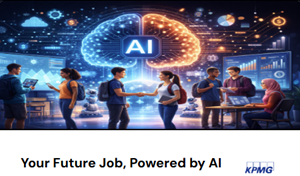
Explore the current KnoPro Challenge, “Your Future Job, Powered by AI” sponsored by KPMG. Running now through May 25th, 2026.